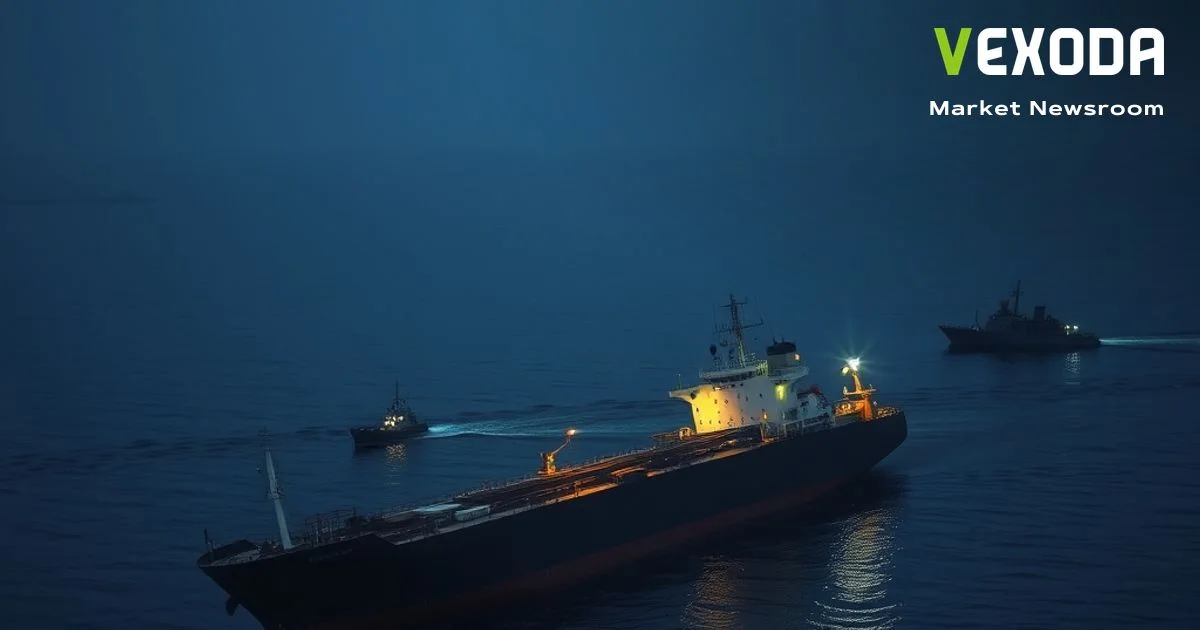

Fresh reports of attacks on vessels near the Strait of Hormuz have brought renewed attention to US-Iran tensions, potentially impacting oil prices and broader market sentiment.
Recent reports indicate a series of incidents in the northern Gulf, with claims by the Islamic Revolutionary Guard Corps (IRGC) that four vessels caught fire and three others were struck by mines west of the strategically vital Strait of Hormuz. These events serve as a potent reminder that underlying tensions between the United States and Iran remain a significant factor in the global geopolitical landscape, even if major escalations have not been prominent recently.
The IRGC has also issued a warning, suggesting that Iran's response could extend to US military bases throughout the region should Washington continue to encourage maritime traffic through the Strait of Hormuz. This statement underscores the potential for a wider regional conflict, highlighting the delicate balance of power and the risks associated with maritime navigation in this critical energy chokepoint.
The primary concern stemming from these incidents is the continued vulnerability of shipping through the Strait of Hormuz, one of the world's most crucial energy transit routes. Even if current oil supplies remain unaffected, the mere threat of disruption is sufficient to keep shipping insurance costs elevated and embed a geopolitical risk premium into the price of crude oil, hindering market stabilization.
These developments have led to a cautious market sentiment, with investors remaining on edge. While recent US-Iran related news has not seen significant market impact due to a lack of major escalations, the potential for these simmering tensions to erupt quickly brings renewed focus to oil prices, inflation concerns, and overall risk aversion in financial markets.
The ongoing geopolitical instability in the Strait of Hormuz region has significant implications for global energy markets and the broader economy. Elevated oil prices can contribute to inflationary pressures, impacting consumer spending and corporate profitability. Furthermore, increased geopolitical risk can dampen investor confidence, potentially leading to reduced investment and slower economic growth.
Traders and market participants will be closely monitoring the situation for any signs of de-escalation or further aggressive actions from either side. The upcoming US midterm elections may also play a role, as potential shifts in US policy could influence regional dynamics. Clarity on future US strategies concerning Iran will be crucial for assessing the long-term outlook for oil markets and geopolitical stability.
The Strait of Hormuz is a narrow waterway, approximately 21 miles wide at its narrowest point, through which about 30% of the world's seaborne oil passes daily. Any significant disruption here could have immediate and severe consequences for global oil supply and prices, affecting economies worldwide that rely on this crucial energy artery.
Source: InvestingLive. Summarized and rewritten by the Vexoda Newsroom. This is market news, not financial advice.