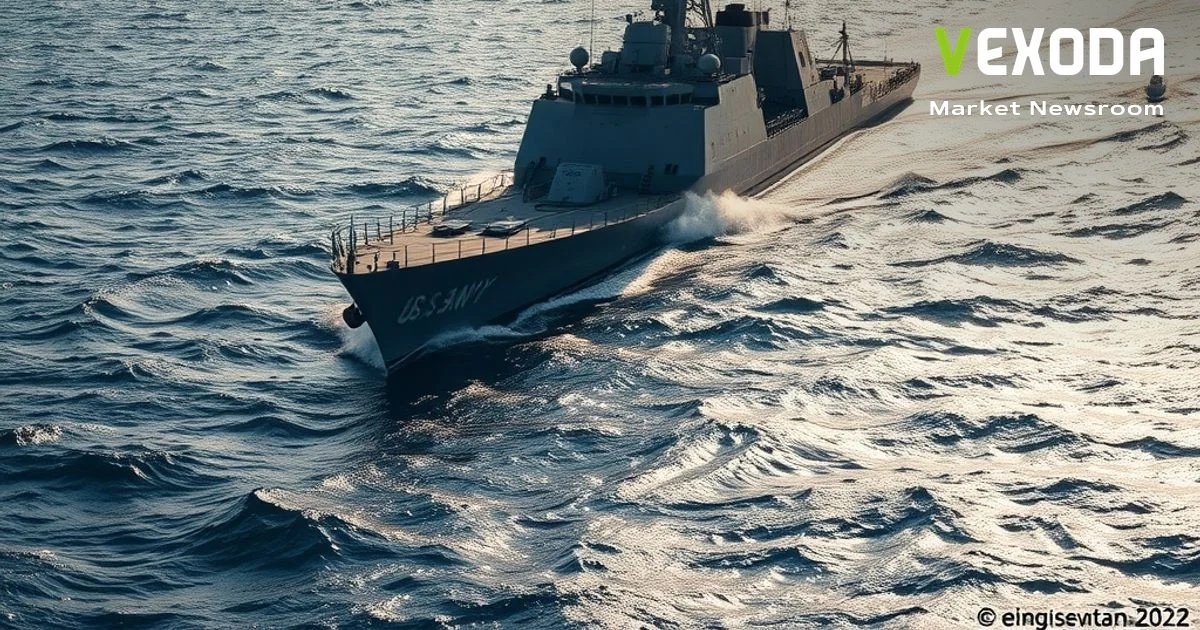
Trump Claims US Dominance Over Strait of Hormuz, Oil Markets Watch for Details

Vexoda Newsroom
President Trump asserted near-total US control over the Strait of Hormuz, a critical global oil chokepoint. While signaling impending developments concerning Iran, the lack of specific details left oi
President Donald Trump recently declared that the United States holds "almost total control" over the Strait of Hormuz, a vital waterway for global oil transportation. These remarks suggest an impending shift in the geopolitical landscape concerning Iran, although the President provided no specific details regarding the nature of these forthcoming developments. The ambiguity leaves market participants uncertain about whether the next steps will involve diplomatic negotiations, potential military actions, or revised agreements governing maritime passage through this strategically significant strait.
The comments are particularly relevant to oil traders, who are keenly focused on whether Trump's assertion of command translates into assured and consistent oil flows. Any indication that shipments remain secure and uninterrupted would alleviate existing concerns about potential supply disruptions originating from the Persian Gulf region. However, the vague timeline of "very soon" offers little concrete assurance, and traders will likely demand specific details to understand the path forward and confirm the safety of tanker traffic through the Strait of Hormuz.
The Strait of Hormuz, located between Iran and Oman, is one of the world's most critical maritime chokepoints, with approximately one-third of the world's seaborne oil trade passing through it annually. Control or disruption of this narrow waterway can have immediate and significant impacts on global energy prices and supply chains. Iran has previously threatened to block the strait in response to international pressure, making any statements regarding US control a focal point for market participants monitoring regional stability.
Following President Trump's remarks, crude oil futures initially saw a brief upward movement, with prices extending towards the $92 per barrel level. However, this rally proved short-lived, as prices subsequently rotated back downwards. At the time of reporting, crude oil futures were trading around $90.65 per barrel, falling short of key technical resistance levels, including the 100 and 200-hour moving averages which were situated near $92.60.
Technically, crude oil prices have moved back below the broken 38.2% Fibonacci retracement level, which stood at $91.68. Maintaining prices below these technical indicators suggests that selling pressure may continue to dominate the market in the near term. The next significant level of support for crude oil traders to watch is identified near the swing lows recorded around the $88.73 mark, representing a potential target if the downward momentum persists.
The core implication for energy markets hinges on the tangible outcomes of Trump's pronouncements. While the assertion of control is a strong statement, its real-world impact will be measured by the continued, unimpeded flow of oil and the absence of escalating tensions. Traders will be closely observing any follow-up actions or official statements that clarify the strategy, looking for confirmation that global energy supplies will remain secure despite the heightened rhetoric.
Source: InvestingLive. Summarized and rewritten by the Vexoda Newsroom. This is market news, not financial advice.