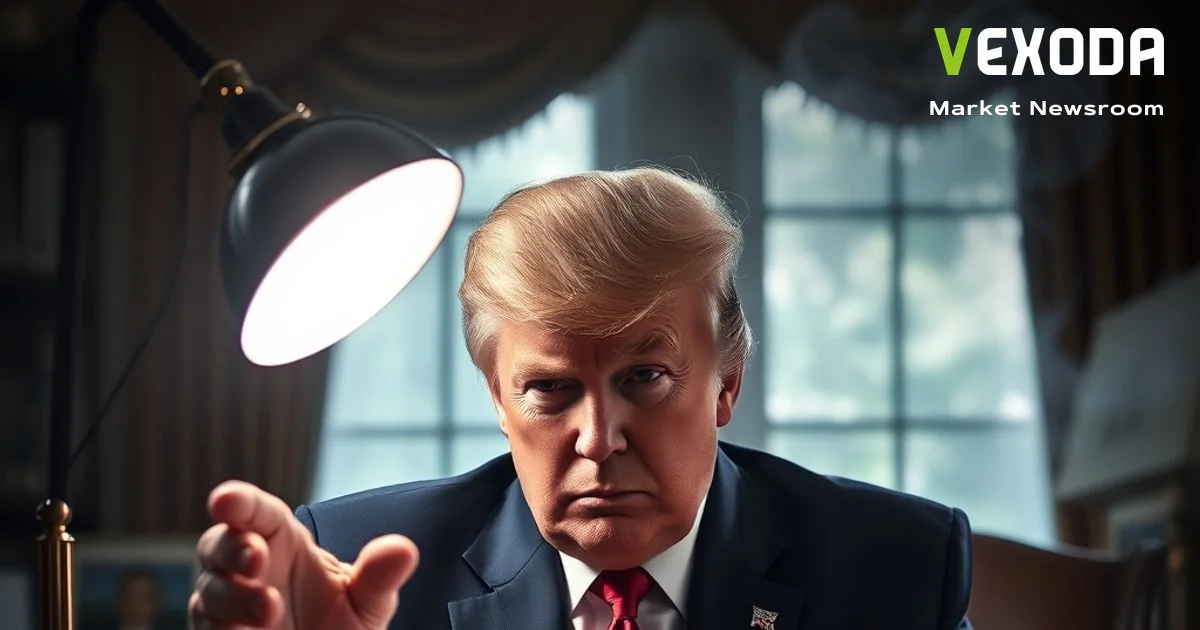
US-Canada Tariff Deal Nears Completion; Iran Tensions Remain

Vexoda Newsroom
President Trump announced a potential tariff agreement with Canada, signaling progress on trade relations while noting ongoing tensions and potential negotiations with Iran, which could impact oil pri
President Trump has indicated that a trade agreement has been reached with Canada regarding existing tariffs, following a reported positive discussion with Prime Minister Justin Trudeau. While the announcement suggests a significant step towards resolving trade disputes, the President stressed that the deal requires finalization, meaning the terms are not yet definitively locked in. This development follows a temporary halt in the imposition of previously threatened 50% tariffs, creating a period of anticipation for market participants.
The key players in this trade narrative are the United States and Canada, with President Trump and Prime Minister Trudeau at the forefront of the negotiations. The specific issue centers on tariffs, which are taxes imposed on imported goods. The mention of a potential resolution suggests a de-escalation of trade friction that has been a source of uncertainty for businesses and investors operating in North America.
This trade dialogue occurs against a backdrop of broader global economic concerns and ongoing trade policy shifts. The pause on tariffs provided a brief respite, allowing for dialogue and negotiation. The eventual finalization of any deal will be crucial for restoring predictability in trade flows between the two neighboring economies, impacting various sectors from manufacturing to agriculture.
In response to these developments, the Canadian dollar (often referred to as the 'loonie') has seen some support. However, much of the positive sentiment related to a potential trade breakthrough may have already been factored into the currency's value. Current gains appear to be partially driven by broader weakness in the U.S. dollar, suggesting a complex interplay of factors influencing currency markets beyond just bilateral trade news.
Beyond trade, President Trump also commented on the geopolitical situation involving Iran and the Strait of Hormuz, a vital chokepoint for global oil transportation. He noted that numerous vessels had transited the waterway and suggested that diplomatic negotiations with Iran might occur at some future juncture. Furthermore, he expressed an expectation that oil prices would decline significantly once the current tensions, which affect supply routes, are resolved.
The situation with Iran carries significant implications for global energy markets and inflation. Any prolonged disruption or escalation of conflict in the Strait of Hormuz could lead to a surge in oil prices, potentially fueling inflationary pressures worldwide. The U.S. Treasury's recent actions are also noted as a current market driver, adding another layer of complexity to the economic outlook.
Traders will be closely monitoring the finalization details of the US-Canada trade agreement, as well as any concrete steps towards de-escalation or further confrontation with Iran. Developments concerning the Strait of Hormuz and their impact on oil supply and pricing will remain a critical focus. Additionally, market participants should pay attention to any further guidance or actions from the U.S. Treasury that could influence inflation expectations and overall market sentiment.
Source: InvestingLive. Summarized and rewritten by the Vexoda Newsroom. This is market news, not financial advice.