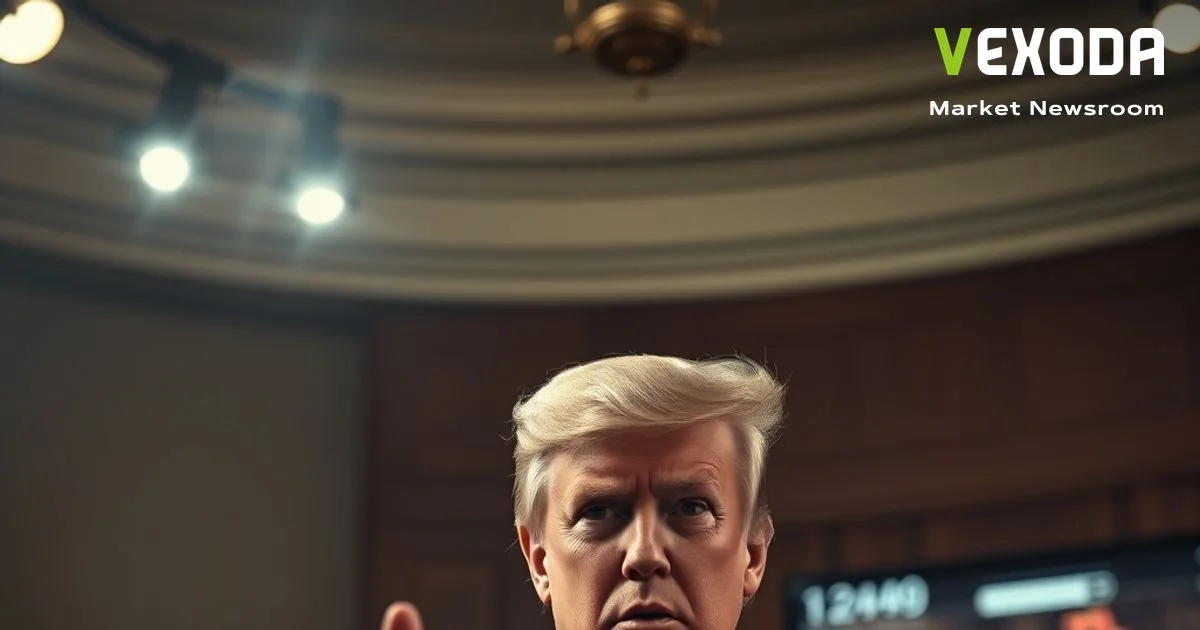
Trump Puts Pressure on Fed Over Interest Rates and Trade Deficits

Vexoda Newsroom
President Trump linked interest rate policy to trade deficits, warning the Federal Reserve to lower rates or face potential trade actions against deficit nations. The market reacted cautiously to the
President Donald Trump has publicly urged the Federal Reserve to lower interest rates, directly linking this monetary policy decision to the nation's trade imbalances. His statement suggests a potential willingness to implement trade measures against countries with which the United States holds a significant trade deficit if the Fed does not adjust its rate policy accordingly. This direct intervention in central bank affairs highlights a recurring theme of the Trump administration's approach to economic policy, seeking to influence both domestic and international economic dynamics.
The core players in this development are President Trump, representing the executive branch and its trade policy agenda, and the Federal Reserve, the independent central bank responsible for setting monetary policy, including interest rates. The 'countries with which we have a deficit' refers to nations whose exports to the U.S. exceed their imports from the U.S., creating a trade gap. The President's statement implies a desire for a weaker U.S. dollar, which could be stimulated by lower interest rates, potentially making U.S. exports cheaper and imports more expensive, thereby narrowing trade deficits.
This situation arises against a backdrop of ongoing discussions about global trade practices and the appropriate level of U.S. interest rates. The Federal Reserve typically bases its decisions on a mandate to maintain price stability and maximize employment, often acting independently of political pressure to avoid politicizing monetary policy. President Trump's comments suggest a desire to see interest rates move in a direction that he believes will benefit U.S. trade performance, potentially at odds with the Fed's own economic assessments.
Following the announcement of the latest U.S. jobs report, which provided new economic data, the U.S. dollar experienced a notable pullback. The dollar had initially shown strength but subsequently surrendered most of those gains. This market reaction indicates that traders interpreted the jobs data as less 'hawkish' than anticipated – meaning less indicative of inflationary pressures that might prompt the Fed to raise rates. The President's subsequent remarks appear to have further contributed to the dollar's decline, as markets digest the potential impact of his policy preferences.
The significance of President Trump's statement lies in the intersection of monetary policy and trade policy. By linking interest rates to trade deficits, he is attempting to exert leverage on the Federal Reserve, which typically operates with considerable autonomy. This approach could create uncertainty in financial markets, as traders assess the likelihood of either a Fed policy shift or potential trade actions. A lower interest rate environment could also impact global capital flows and currency valuations, potentially leading to broader market adjustments.
Looking ahead, market participants will be closely monitoring the Federal Reserve's upcoming policy meetings and statements for any indications of how they are responding to this pressure. Investors will also watch for any concrete trade actions taken by the administration against countries with large trade deficits. The ongoing interplay between the White House's trade objectives and the Federal Reserve's monetary policy independence will remain a critical factor influencing currency markets, bond yields, and overall investor sentiment in the near term.
Source: InvestingLive. Summarized and rewritten by the Vexoda Newsroom. This is market news, not financial advice.