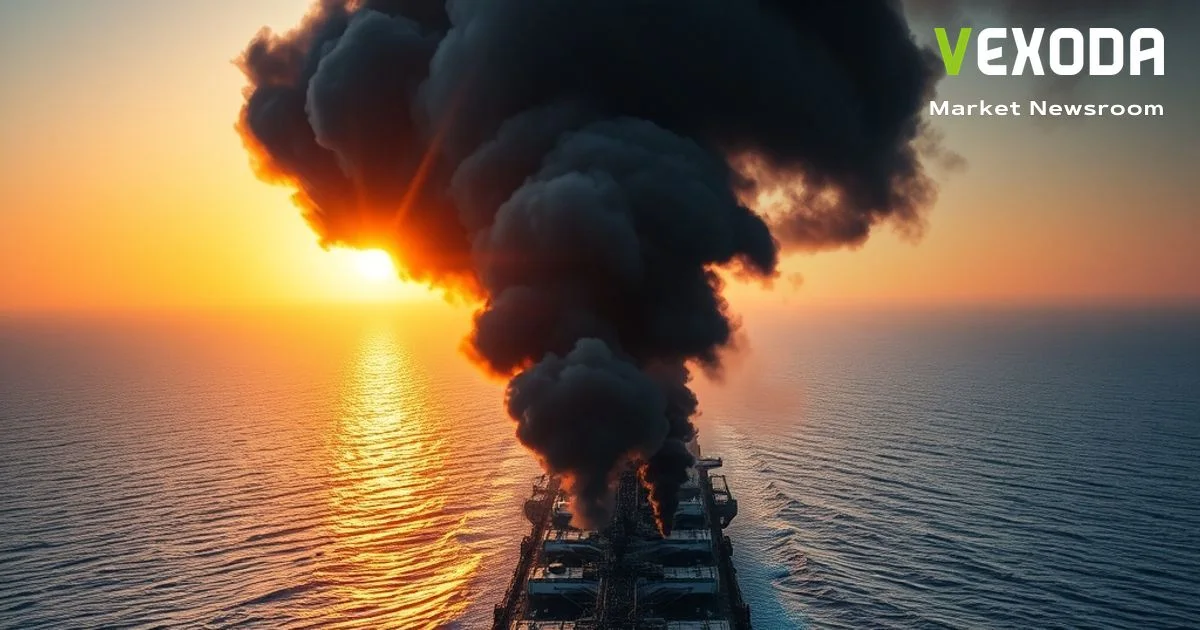
Supertanker Fire in Strait of Hormuz Fuels Geopolitical Tensions

Vexoda Newsroom
An IRGC claim of a supertanker catching fire after hitting naval mines in the Strait of Hormuz escalates regional tensions, signaling potential disruption to global oil trade routes.
The Islamic Revolutionary Guard Corps (IRGC) has reported that a supertanker sustained a fire after reportedly striking two naval mines within the crucial Strait of Hormuz. According to the IRGC's statement, the vessel was traversing the waterway through the southern passage, which they deemed an "illegal" transit. This incident, if confirmed, marks a significant escalation in a region already grappling with heightened geopolitical friction.
The IRGC further asserted that all maritime traffic must adhere to specific regulations for passage through the Strait of Hormuz, emphasizing their control over this vital chokepoint. This declaration underscores Iran's strategic position and its willingness to enforce its interpretations of maritime law. The statement implies a warning to international shipping that non-compliance could result in severe consequences, potentially impacting global trade.
This event unfolds against a backdrop of renewed tensions between Iran and the United States, which reportedly intensified over the preceding weekend. Such incidents are often interpreted as deliberate messages aimed at projecting power and influencing international policy. The IRGC's actions suggest a strategic communication effort, utilizing maritime disruptions to convey a strong political stance to global powers.
The Strait of Hormuz is an exceptionally narrow waterway, serving as a critical transit point for a significant portion of the world's oil supply. Any perceived threat or disruption within this chokepoint can have immediate and far-reaching implications for global energy markets, potentially leading to price volatility and supply concerns for nations heavily reliant on oil imports.
Market participants will be closely monitoring official confirmations and further statements from both Iranian authorities and international bodies. The reaction from global oil prices, shipping insurance rates, and the broader geopolitical risk sentiment will provide early indicators of the incident's perceived severity and potential economic fallout. The ongoing nature of these exchanges suggests a prolonged period of elevated risk.
Traders should remain vigilant for any further reports of maritime incidents or escalations in the region. A sustained pattern of disruption in the Strait of Hormuz could lead to a risk premium being embedded in crude oil prices, affecting currency pairs sensitive to energy costs, such as the USD/CAD and NOK/NOK. Geopolitical developments will likely continue to overshadow purely economic data in driving market sentiment.
Source: InvestingLive. Summarized and rewritten by the Vexoda Newsroom. This is market news, not financial advice.