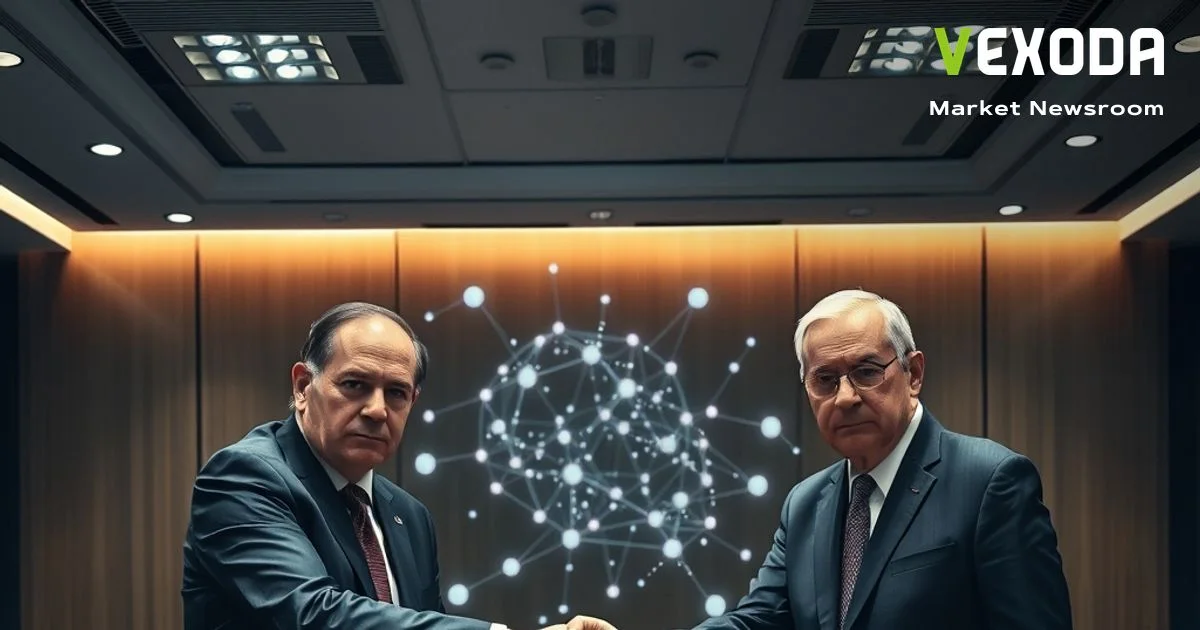
Hong Kong Regulators Enhance Crypto Oversight with New Accord

Vexoda Newsroom
Hong Kong's financial watchdogs, the SFC and AFRC, have signed a memorandum of understanding to deepen cooperation on financial reporting and auditing for licensed virtual asset service providers, bol
Hong Kong's financial regulatory landscape has seen a significant development with the signing of a new memorandum of understanding (MoU) between the Securities and Futures Commission (SFC) and the Accounting and Financial Reporting Council (AFRC). This accord formally extends enhanced cooperation in areas of financial reporting, auditing, and compliance oversight to encompass licensed virtual asset service providers operating within the jurisdiction. The agreement signifies a commitment by Hong Kong authorities to align the regulatory scrutiny of digital asset firms with that of traditional financial institutions.
The key players in this regulatory expansion are the SFC, responsible for overseeing securities and futures markets, and the AFRC, which focuses on accounting and financial reporting standards. This new MoU supersedes a prior agreement from 2021, reflecting an evolving approach to digital asset regulation. It specifically targets SFC-licensed virtual asset service providers, alongside other licensed corporations, registered open-ended fund companies, and authorized funds, ensuring a broader and more consistent application of financial compliance standards across various entities.
This heightened regulatory focus is part of Hong Kong's broader strategy to establish itself as a key hub for digital assets. In recent months, the region has been actively developing its framework for virtual assets, introducing new rules for crypto advisory services and establishing guidelines for virtual asset margin financing and perpetual contracts. The signing of this MoU demonstrates a proactive approach to ensuring that as the digital asset ecosystem grows, it does so within a robust and well-regulated environment, aiming to foster trust and stability.
While the immediate market reaction to the news was not explicitly detailed in the initial report, such regulatory developments typically aim to improve investor confidence. By increasing transparency and accountability through stricter financial reporting and auditing, regulators seek to mitigate risks associated with virtual asset trading. This can lead to greater institutional adoption and a more mature market, potentially attracting more capital and sophisticated participants over the long term, though short-term adjustments in trading strategies might occur as firms adapt.
The implications of this expanded oversight are substantial for both licensed crypto firms and the broader financial market in Hong Kong. It signals a clear intent to integrate the digital asset sector more tightly into the established financial regulatory system, promoting a level playing field and reducing perceived risks. This enhanced cooperation is crucial for safeguarding investors, preventing illicit activities, and maintaining the overall integrity and stability of Hong Kong's financial markets as they embrace innovation in digital assets.
Moving forward, traders and market participants will be closely observing how this MoU translates into practical enforcement and compliance measures. Key areas to watch include the specific audit standards being applied to virtual asset firms, the effectiveness of information sharing between the SFC and AFRC, and any potential impact on operational costs or business practices for licensed crypto companies. The success of this initiative will largely depend on the consistent and transparent implementation of these enhanced reporting and audit requirements.
Source: Cointelegraph. Summarized and rewritten by the Vexoda Newsroom. This is market news, not financial advice.