Explosions Reported in Strait of Hormuz; Oil Prices and Markets on Edge

Vexoda Newsroom
Unconfirmed reports of severe explosions in the Strait of Hormuz, including a tanker incident, have heightened geopolitical tensions and are impacting global financial markets.
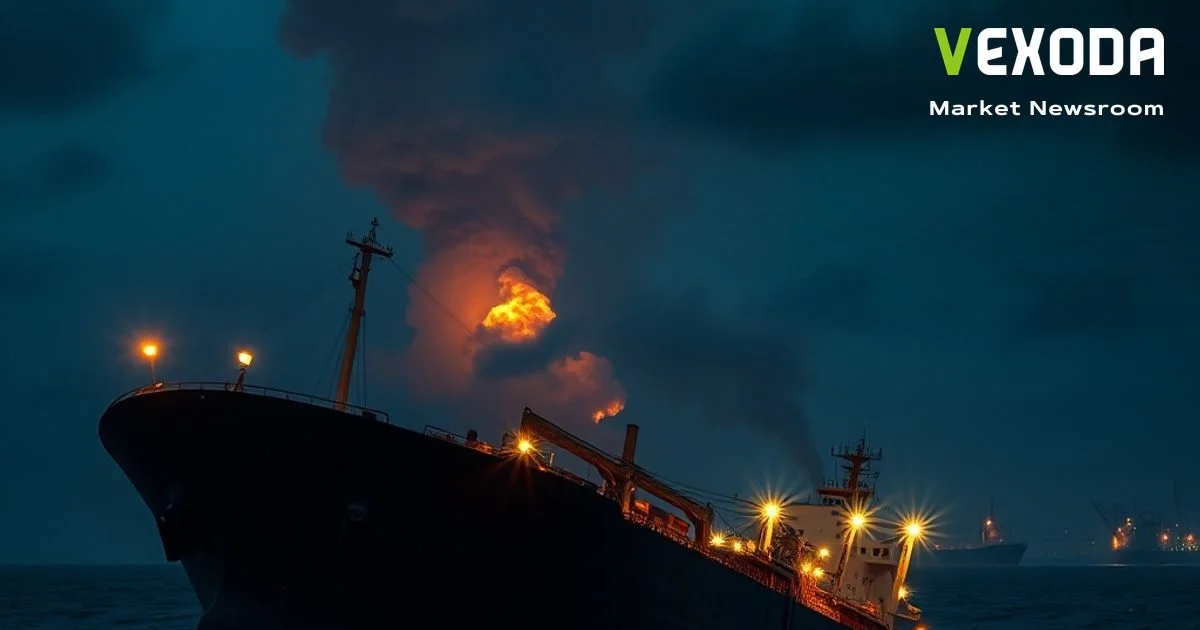
Reports have emerged from Arab sources indicating multiple significant explosions in the strategically vital Strait of Hormuz. While these reports remain unverified, they suggest that at least one tanker was directly targeted in the incidents. The strait is a critical chokepoint for global oil and gas shipments, making any disruption there a matter of significant international concern.
The key entities involved, as per the limited information, include unnamed Arab sources reporting the events and a tanker, the specific identity and ownership of which has not been disclosed. The Strait of Hormuz itself is the central 'player' due to its critical role in global energy supply chains. These unconfirmed reports arrive at a time when geopolitical risk premiums in financial markets have been a persistent concern for investors.
The Strait of Hormuz, a narrow waterway connecting the Persian Gulf to the Gulf of Oman, is one of the world's most important oil transit points. Approximately one-fifth of global oil consumption passes through this strait annually. Consequently, any instability or conflict in this region has the potential to severely disrupt global energy supplies, leading to price volatility and broader economic implications.
In response to these developing geopolitical concerns, financial markets have shown signs of nervousness. US stock markets, particularly technology-heavy indices, have reversed earlier gains and moved lower. The NASDAQ index, for example, has been observed testing previous swing highs, currently hovering around the 27,210 level, indicating a potential shift in sentiment. Similarly, the S&P 500 has dipped below its prior high swing area, trading near 7,756.
The immediate implication of such events is a potential surge in crude oil prices due to the threat of supply disruption. This could filter through to inflation expectations and consumer prices globally. For financial markets, heightened geopolitical risk often leads to increased volatility across asset classes, as traders reassess risk exposures and potentially move towards safer haven assets.
Traders will be closely monitoring official confirmations or denials of these reports from relevant authorities and international bodies. Any further escalation or confirmed details regarding the incidents will likely dictate market movements. Key indicators to watch include oil price action, the performance of major equity indices, and currency fluctuations, particularly in energy-dependent economies. The level of geopolitical risk premium priced into the market will be a crucial factor.
Source: InvestingLive. Summarized and rewritten by the Vexoda Newsroom. This is market news, not financial advice.